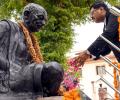
Justice Bhushan Ramkrishna Gavai, India's 52nd chief justice and its first Buddhist one, has played a key role in shaping the judicial landscape, penning about 300 verdicts, including landmark rulings on constitutional issues, liberty, and perhaps most important against the executive's 'bulldozer justice'.
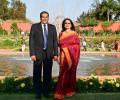
Some of his directives had the Supreme Court judges disclose their assets whereas the row over the discovery of cash from a sitting judge's official residence paved way for inquiry.

Away from the courtroom and legal circles, Nariman was a familiar figure for residents of Hauz Khas who would see him walk regularly, even in the cold winter months of December and January.

Creating a record, the CJI headed apex court collegium meetings led to appointment of 11 Supreme Court judges with nine of them, including three women, appointed in one go.
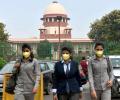
Amid debate whether the Centre's decision to provide free COVID-19 vaccine to all above 18 years was triggered by the Supreme Court's recent remarks on the jab policy, a class Vth student of Kerala, Lidwina Joseph, has written to Chief Justice N V Ramana lauding the top court for its effective intervention and saving lives in the fight against pandemic.
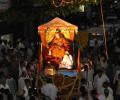
In 1970, Bharati, the hereditary head of Edneer Hindu 'Matha' in Kasaragod district of Kerala, had moved the top court challenging the state government's two land reform Acts meant to restrict the management of religious properties. The case had a number of firsts to its credit.
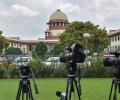
Verdicts paving the way for construction of a Ram Temple at Ayodhya and India's multi-billion dollar Rafale fighter jet deal with France were 2019's landmark imprints of the Supreme Court, which also found itself at the centre of a controversy with then Chief Justice of India Ranjan Gogoi being accused of sexual harassment before getting the clean chit.

The Supreme Court directed that the voting in the assembly will not be on the basis of secret ballot and the entire proceeding will have to be telecast live.

The apex court said it is not considering the Shiv Sena-NCP-Congress' combine's plea that they be invited to form government in Maharashtra.
Justice Gogoi's tenure as judge and as CJI was marked by some controversies and personal allegations but that never came in his way of his judicial work that was reflected in the last few days when benches headed by him delivered some path-breaking judgments.

A majority verdict by Chief Justice Ranjan Gogoi and Justices A M Khanwilkar and Indu Malhotra decided to keep pending the pleas seeking a review of its decision regarding the entry of women into the shrine, and said restrictions on women in religious places was not restricted to Sabarimala alone and was prevalent in other religions as well.
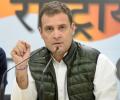
The court said the remarks made by Gandhi were far from true and he should have refrained from those and could have been careful.
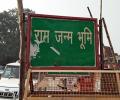
The Law of Limitation provides for mandatory filing of a lawsuit within a fixed statutory time period after the cause of action arises in favour of an aggrieved person.
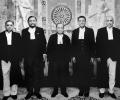
The apex court, which delivered a historic unanimous judgment putting the curtains down on the vexatious legal battle that has torn the social fabric of the nation, said citizens of all faiths, beliefs and creeds 'seeking divine provenance' are both subject to law and equal before law under the Indian Constitution.

Chief Justice of India designate Justice Sharad Arvind Bobde, who will assume charge as the 47th Chief Justice of India on November 18, in a wide-ranging interview discussed the significance of dispensation of timely justice, criticism of judges and the lack of infrastructure in judiciary.

Justice Bobde, 63, also rued the criticism of judges on social media for their judicial actions and said most of the judges, who are not "thick skinned", get perturbed.

A rebel by nature, he lived the life to the fullest, donning different hats -- lawyer, parliamentarian, minister -- but was not a quintessential politician constrained by party lines.

'The appearance of idols of deities inside Babri was not a miracle. It was a planned and surreptitious attack to put them on the intervening night of December 22-23, 1949'

"I am supporting the Hindu side," lawyer M C Dhingra, appearing for Shia Wakf Board, told the bench.
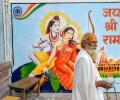
SC was requested to judicially scrutinise whether Babur dedicated the disputed structure in Ayodhya to 'Allah'
 © 2025 Rediff.com - Investor Information - Advertise with us - Disclaimer - Privacy Policy - Sitemap - Feedback - About us - Terms of use - Grievances